
Introduction
Thanks to Stuart Nisbet for this article and its accompanying photographs.
The White Cart is a highlight of the park and is a natural feature. However, over the centuries, it has been heavily managed by man.
As it flows through Linn Park, the river traditionally passed over three natural or man-made mill dams: Linn Falls, Millholm Dam, and Cathcart Mill Dam.
These obstructions controlled the flow through the park. When the dams were intact, the river was effectively three long, flat, stretches of water, interrupted by the roar of water at the falls.
The story of the Mills is covered elsewhere on this web site, but in this artcile we look at the dam's effects on the river bed.
Cathcart Mill Dam
The first dam to fall into disuse was Cathcart Mill Dam, at the upstream corner of the converted Suff Mill mill buildings. Old postcards and OS maps show the dam intact into the 1940s (pic). However the dam had not been maintained since the mills were abandoned c.1900. Although built of very large blocks of sandstone, the dam was gradually breached and washed away, when the river was in spate. The only part remaining is a short stretch on the left bank of the river.
Millholm Dam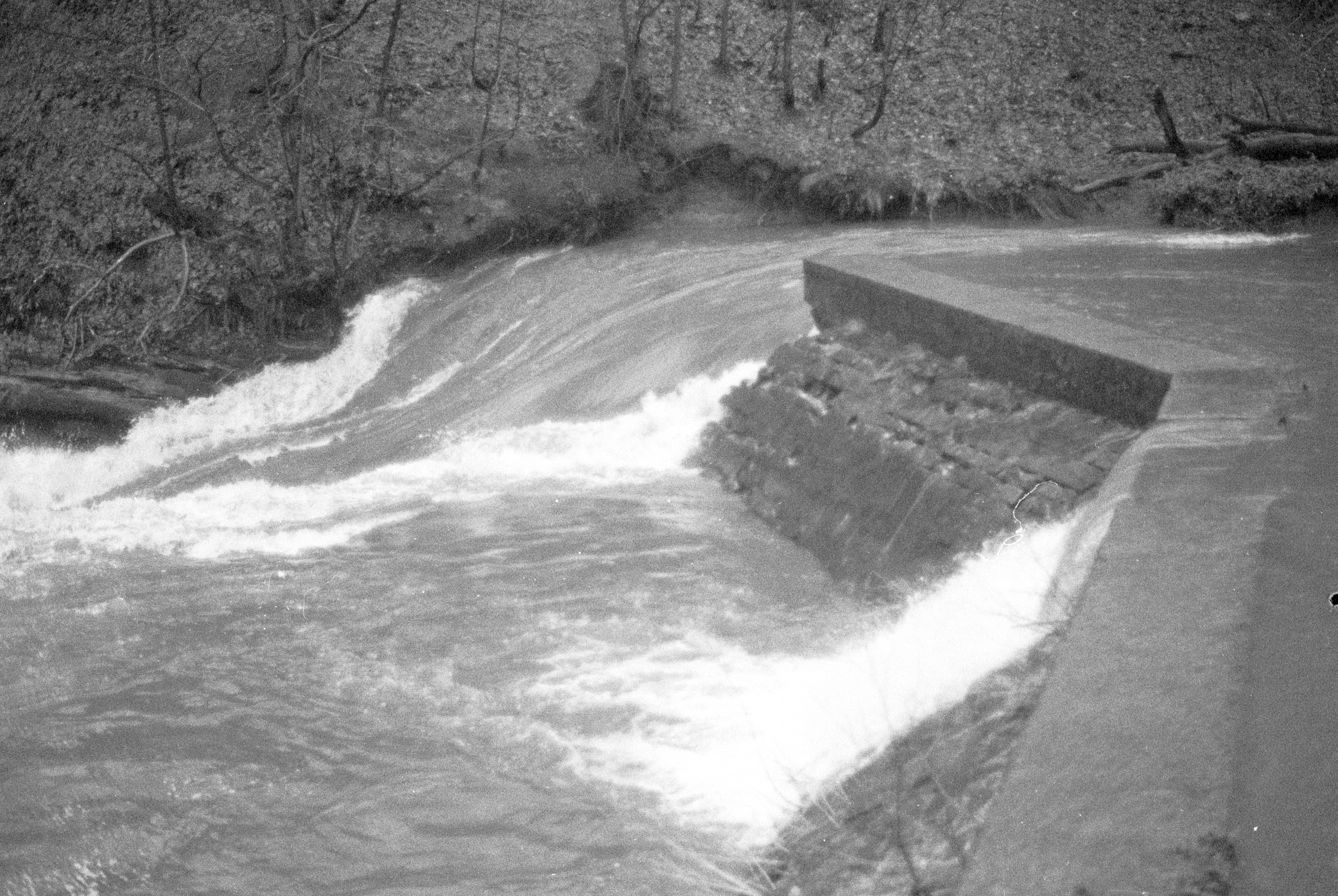
This dam was three times higher than Cathcart Mill Dam. When it was intact, the river was flat and calm most of the way back from the dam to the foot of Linn Falls.
Millholm Dam was breached in 1984. The dam didn't burst, instead the river worked its way into softer strata in the right bank of the river, and worked its way round the edge of the dam (pic).
Over the centuries, the river bed behind the dam had silted up to the dam's crest. The deposits stored behind the dam built up an archaeological record of what had been brought down by the river, over hundreds of years. Each winter since the dam burst, the river has cut deeper into this material, exposing the river's secrets.
Secrets of the White Cart
The White Cart rises on Corse Hill, above Eaglesham. In its first 14km from Corse Hill to Busby, the river cuts through igneous rock. Then in the next 3km from Overlee to Linn, it passes through sandstones and shales. The debris in the river bed includes samples of all these rocks. The further the rocks have been carried, the rounder are their edges. 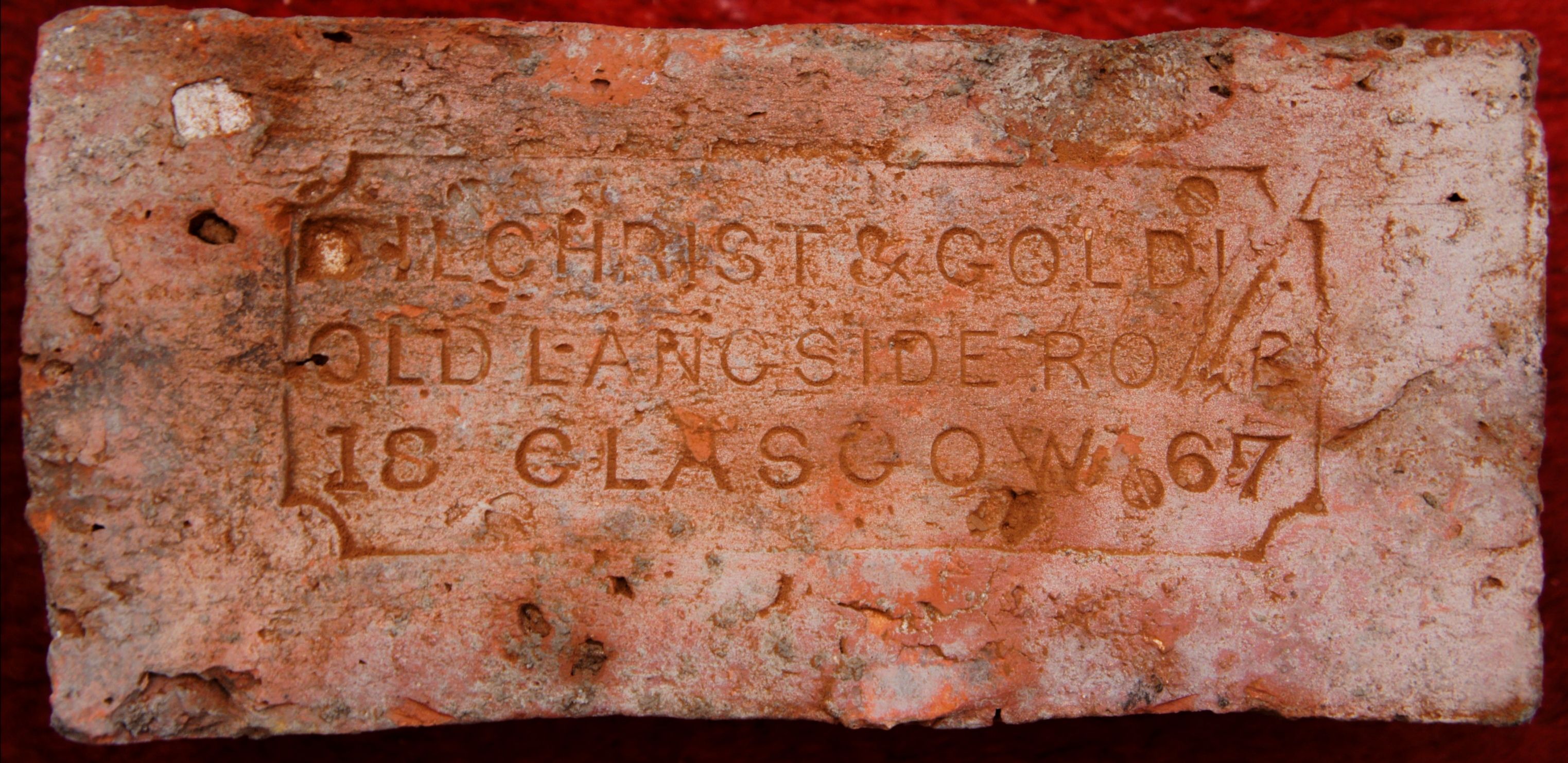

Other material brought down by the river is man-made, including bottles, pieces of fireclay, and a host of much smaller debris.
Easiest to identify are hundreds of red bricks. Many are from the demolition of mills and buildings on the riverside further upstream, especially Netherlee Printworks.
Most bricks bear names of the numerous local brickmakers in the northern part of Cathcart Parish. For more about bricks emanating from Cathcart, visit https://www.scottishbrickhistory.co.uk/?s=cathcart.